KAIZEN TRAINING PROGRAM
Empowering Continuous Improvement Through Small, Incremental Changes
Learn the philosophy and practical application of Kaizen, the Japanese concept of continuous improvement involving everyone in the organization, from top management to front-line workers.
Kaizen, meaning 'change for better' or 'continuous improvement,' is a foundational element of Lean manufacturing and operational excellence. It promotes a culture where small, incremental improvements are made consistently over time, leading to significant long-term gains in efficiency, quality, safety, and cost reduction.
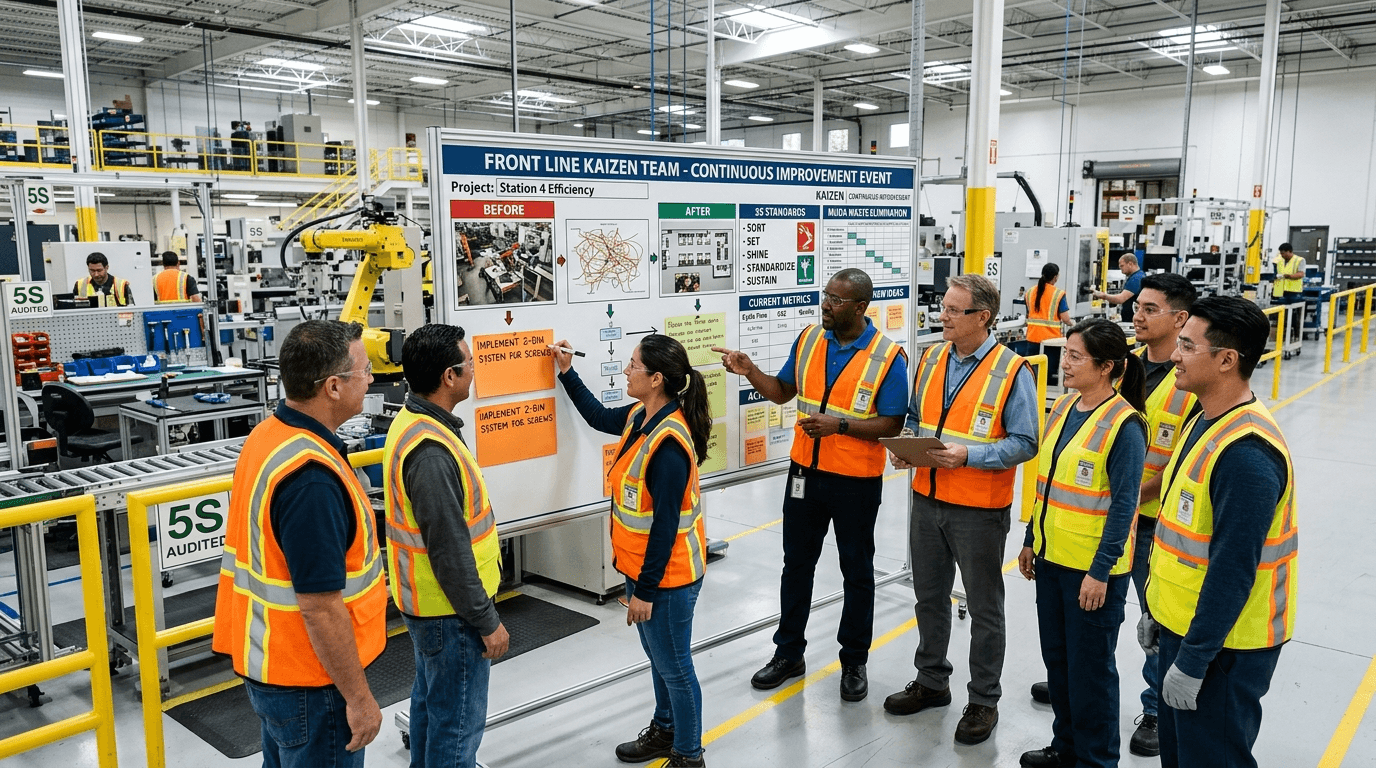
Unlike large-scale, revolutionary changes, Kaizen focuses on empowering employees to identify and implement small improvements in their own work areas. This training explores the Kaizen philosophy, common methodologies (like Kaizen Events/Blitzes), relevant tools, and how to foster a sustainable culture of continuous improvement.
Why Choose Tetrahedron for Kaizen Training?
Tetrahedron's Kaizen training emphasizes practical implementation and cultural integration. Our experienced Lean facilitators guide participants through the Kaizen mindset, tools, and event structures (like Kaizen Blitzes). We use interactive exercises, simulations, and real-world examples to demonstrate how to effectively identify waste, generate improvement ideas, implement changes quickly, and sustain the gains.
Ready to build a culture of continuous improvement?
Learn the power of small, consistent changes with our Kaizen training.
Key Kaizen Concepts & Principles

Total Employee Involvement
Focus on Waste (Muda) Elimination
Bias for Action & Quick Implementation
Emphasis on Process, Not Just Results
Standardization as a Foundation
Gemba (Go to the Actual Place) Focus
Low-Cost / No-Cost Solutions Prioritized
Continuous, Incremental Improvement
Key Benefits
Continuous Improvement Culture
Embeds the practice of ongoing small improvements into the daily work routine.
Increased Employee Engagement & Empowerment
Empowers employees to identify problems and implement solutions in their own areas.
Improved Productivity & Efficiency
Small, consistent improvements accumulate to significant gains over time.
Enhanced Quality
Focus on process improvement leads to reduced defects and better quality outcomes.
Reduced Costs
Eliminating waste in processes directly lowers operational expenses.
Faster Problem Solving & Implementation
Kaizen events provide a structure for rapidly addressing issues and implementing solutions.
Who Should Attend This Kaizen Training?
Kaizen Training Program Course Outline
- Introduction to Kaizen: Philosophy, Principles, History
- Understanding Kaizen vs. Innovation (Kaikaku)
- The Link between Kaizen and Lean Manufacturing
- Identifying Waste (Muda, Mura, Muri) - The Foundation
- The Gemba Walk: Observing Processes Directly
- Kaizen Methodologies:
- - Daily Kaizen (Individual/Small Group Improvements)
- - Kaizen Events / Kaizen Blitz (Focused Improvement Workshops)
- Key Tools Supporting Kaizen:
- - 5S Workplace Organization
- - Value Stream Mapping (Overview)
- - Standard Work
- - Visual Management
- - Basic Problem Solving Tools (5 Why, Fishbone)
- Running Effective Kaizen Events:
- - Planning & Preparation
- - Team Roles & Responsibilities
- - Event Execution (Current State Analysis, Brainstorming, Implementation)
- - Follow-up & Sustainment
- Building and Sustaining a Kaizen Culture
- Leadership's Role in Supporting Kaizen
- Practical Exercises and Kaizen Simulation (if applicable)
- Case Studies of Successful Kaizen Implementation
Training Methodology
- Interactive Presentations and Discussions
- Explanation of Kaizen Principles and Tools
- Group Activities and Brainstorming Sessions
- Practical Exercises and Simulations
- Analysis of Real-world Kaizen Examples
- Guidance on Facilitating Kaizen Events
- Action Planning for Workplace Application
Fostering Continuous Improvement Cultures